
Trace Lauderdale Former Owners Backward
A backward chain starts with a deed reference. The current Lauderdale County appraisal card is the usual source. Each dated book and page row becomes a stepping stone. Every matching deed supplies a grantee, the grantor who conveyed to that grantee, and an instrument type. It also carries a legal description for the parcel. The next property search asks how that grantor acquired the same Lauderdale County tract.
| Transfer date | Party handoff | Recorded form | Reference |
|---|---|---|---|
| May 12, 2023 | Grantor to current grantee | QCD, two rows to inspect | 3228 / 141 and 3228 / 137 |
| July 16, 2015 | Earlier grantor to later grantee | QCD | 2748 / 000519 |
| August 31, 2000 | Prior grantor to prior grantee | Read original image | 1680 / 283 |
| 1983 | Earlier transfer parties | Read original image | 972 / 462 |
A timeline like this teaches method, not title law. It is not a complete title opinion. Two quitclaim entries share one date, so check instrument numbers and images before merging them into a single Lauderdale County transfer. The legal description points to an older deed and excludes road right-of-way, which makes it a stronger clue than a street-only match.
Lauderdale Online History Has Limits
The Chancery grantor-grantee inquiry accepts a begin date of 1/1/1800. That input is not a coverage statement. The portal publishes no earliest indexed or imaged year, and the web index itself says it is not the official Lauderdale County courthouse index.
Filters cover direction, dates, book/page, instrument type, legal description, parcel, PPIN, subdivision, street, and section grid. Treat it as a finding aid. A missing prior transfer changes the plan. Confirm the official index at the land-record counter.
The Lauderdale grantor-grantee search form displays the direction and instrument filters that drive the backward chain through county deed records.
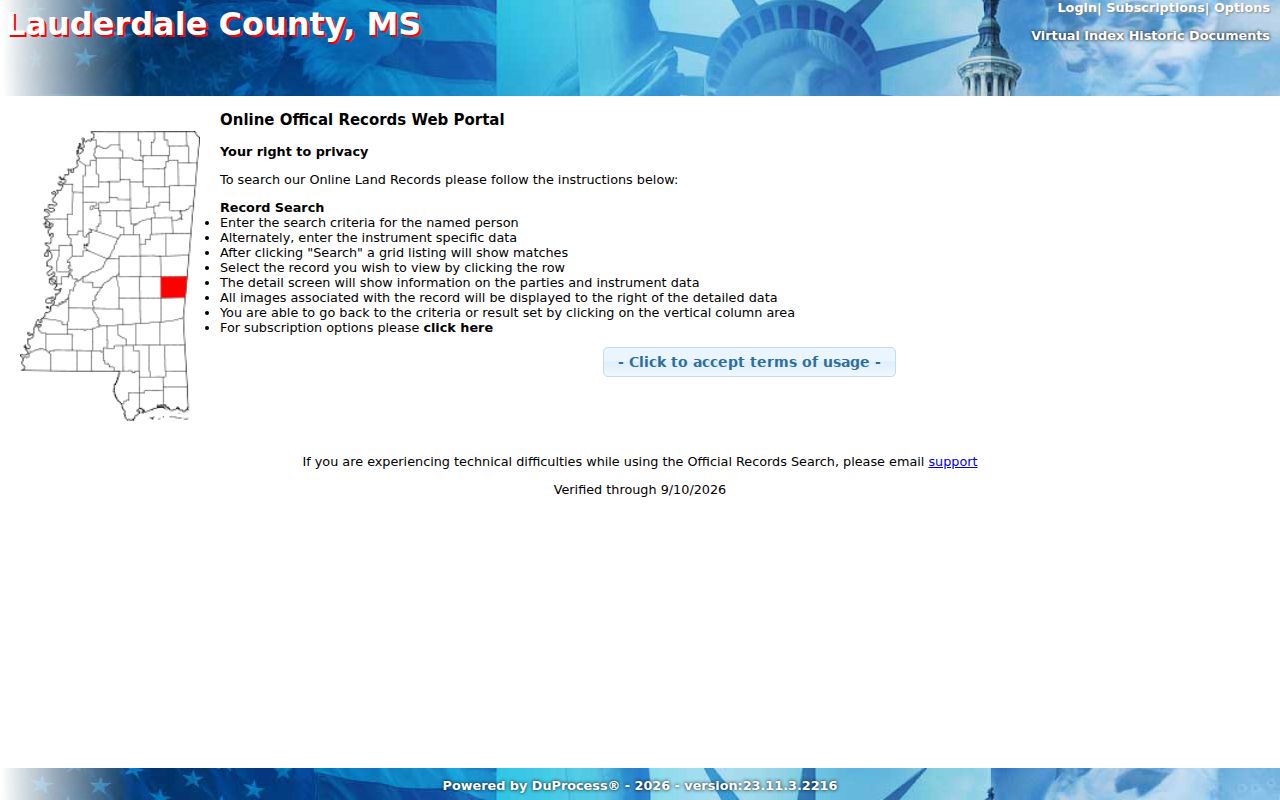
The search screen is the modern starting tool. Courthouse deed books remain the official fallback when a past transfer does not appear in the Lauderdale County index.
No stated online cutoff. Lauderdale does not publish the earliest web-index year. Older former owners may require books, historic images, microfilm, and archives.
Rebuild Lauderdale's Deed Chain
Work one conveyance at a time. Names are clues. The land description is the real thread, because a person can appear as a Lauderdale County grantee on acquisition and a grantor on disposal.
- Find the latest matching deed. Save grantee, grantor, date, book/page, instrument number, and legal description.
- Move the end date earlier. Search that grantor as a grantee, plus spelling variants, parcel, and PPIN.
- Open the earlier instrument. Compare acreage, plat or section calls, exceptions, and cited references.
- Repeat until the target era or a gap, then shift to the official index, historic books, microfilm, or archives.
- Grantor
- The party that conveyed an interest.
- Grantee
- The party that received the recorded interest.
- Chain of title
- The linked sequence of transfers affecting the same tract.
- Reverse index
- A grantor-oriented route used to follow conveyances backward.
- Quitclaim deed
- A deed conveying the grantor's interest without warranty promises.
Reconstruct Lauderdale Owners Before 1887
The FamilySearch Lauderdale deed catalog describes deed records from 1837 through 1886. They sit on 19 microfilm reels. Indexes sit at some volume fronts. Home access to every image is not guaranteed. It still opens a real route into the old chain.
The Mississippi Department of Archives and History county catalog offers another film route. Its Media Room does too. Lauderdale County Archives adds local context, while Chancery books remain the legal land source.
The cataloged reels support a precise range of years. They do not set an invented start date for the modern Lauderdale County portal.
Browse Lauderdale Historic Book Pages
The Chancery Virtual Historic Index is a separate book/page path into Lauderdale County deed records. Start from a known reference. A later deed, appraisal history, plat, or official index can supply one. Portal images are convenient, not certified title opinions.
A book/page reference beats any name-only Lauderdale County guess.
Resolve Lauderdale Estate Chain Breaks
Not every former-owner link is a warranty deed. An estate, executor, executrix, trust, life estate, tax deed, sheriff's deed, or trustee's deed can alter the Lauderdale County name trail. Probate petitions, orders, and final accountings may explain authority to transfer the land. Read the court record with the recorded instrument.
Some court documents require Mississippi Electronic Courts registration or a clerk terminal. An obituary is only a name and date lead. Confirm heirs and authority through probate and Chancery.
Special conveyances also change the verbs. A correction deed, deed from an estate, or trustee's deed may not describe a routine sale. Record what the instrument actually did. Never assume every Lauderdale County grantee was a buyer or every grantor a voluntary seller.
Extend Lauderdale Prior Owner Context
MDAH Series 1202 holds selected Lauderdale County tax, assessment, and land runs from the nineteenth century onward. These records can place a name, acreage, or taxable tract in an era when a deed link is hard to spot. They do not replace a conveyance.
The digitized Lauderdale series shows uneven year coverage.
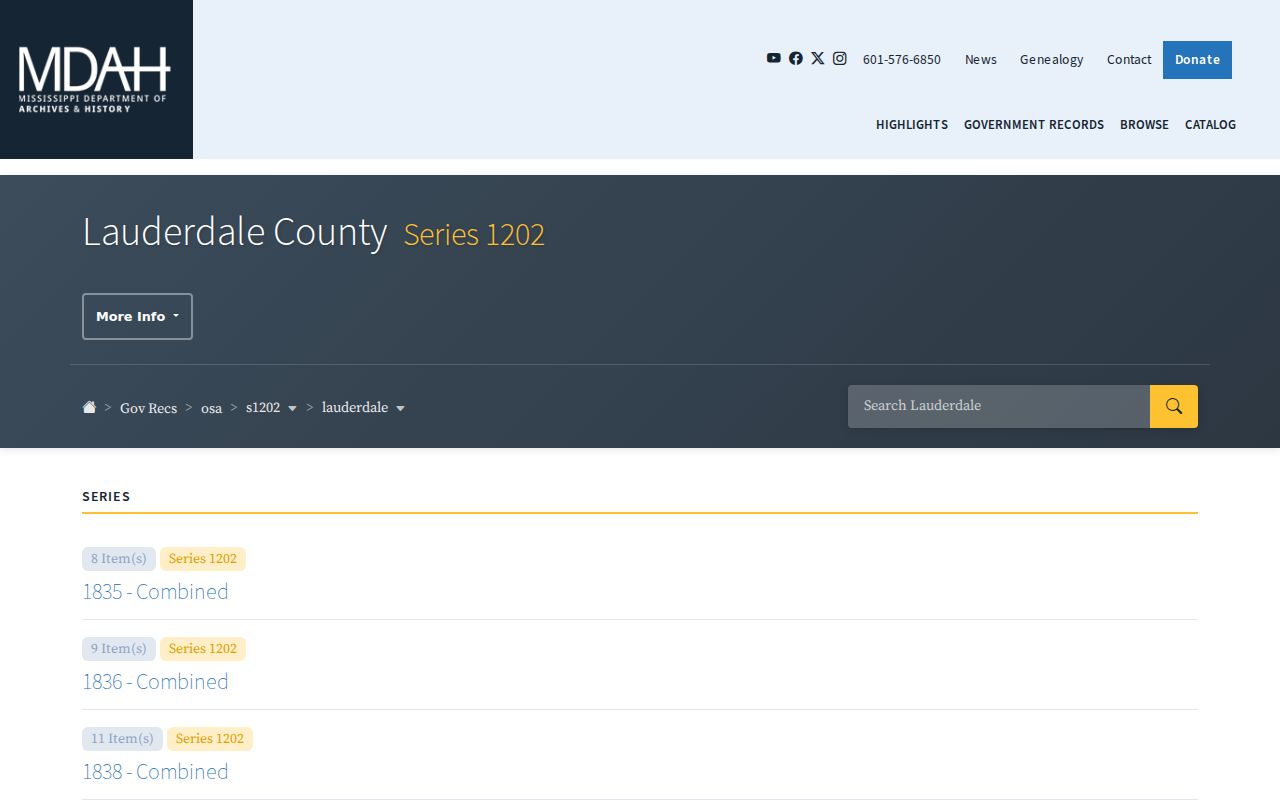
Use the scattered runs to bridge or test a deed theory in Lauderdale County, keeping the Chancery instrument as the transfer evidence for each parcel.
Match Lauderdale Plats and Rights
An old Lauderdale County deed can describe land in surprising ways. It may cite lot and block, a partial quarter section. Or it may cite acreage less a road right-of-way. When the street name is missing, turn to the Chancery subdivision list. Then check the recorded plat. Replats, vacations, and parent tracts all play a part. A modern parcel number often differs from its historic form because of them. Preserve everything exactly as written.
Keep leading zeros, old road names, and subdivision spellings. Also keep section, township, range, acreage, and each cited book/page. A GIS map helps you get oriented. But the recorded deed, plat, and survey still govern the legal question.
Subdivision history can also split a simple owner chain. One early deed may cover a large tract. A later plat may create numbered lots. A replat may combine or divide them again. Search the plat name, block, lot, and related book/page alongside each owner. The current PPIN may not appear in the early deed at all.
Request Lauderdale Ownership History
Not every Lauderdale County record lives online. The Chancery counter, County Archives, and the MDAH Media Room are main non-web channels. The FamilySearch catalog is another. Call Chancery at 601-482-9701 for the official index and deed-book location. County Archives, newspaper microfilm, and Meridian Library digital collections can add developer names and obituaries. They can also add local context that the deed records leave out.
A written request should state the record type, date range, and owner name variants. It should also list the PPIN, legal description, and book/page. Lauderdale County does not conduct research and may charge actual costs. Ask for an identified index page, book image, or stored roll. Do not ask for a finished title history.
MDAH Series 2050 identifies selected original Lauderdale land records. It also covers court records from the nineteenth and twentieth centuries. Its finding aid is not a complete deed series. It can still point to surviving material around a chain break. County newspaper holdings may supply legal notices, estate activity, or subdivision promotion. Treat those items as context until a recorded transfer confirms the property interest.
Document Lauderdale Previous Owners
A reliable chain worksheet separates what you read from what you inferred. Build one row per instrument. Transcribe the grantor and grantee exactly as indexed, then verify the spelling in the image. Add file date, deed type, instrument number, book/page, parcel or PPIN, acreage, subdivision or section calls, and every exception. Record the URL or counter source and the access date too.
Label an uncertain link as unresolved. Never force a same-name match. Search middle initials, former names, ETAL, estate wording, and entity forms. Then compare the tract description before accepting a connection. A prior owner might have conveyed only part of a parent parcel. He might also have retained an easement. He might also appear in a corrective instrument that created no new full ownership period.
Road right-of-way language offers a useful warning. A clean map outline and a tidy acreage figure can hide an exception. That exception may have been carried forward from an older deed. Follow the cited book/page and read the plat. Do this before describing the land each former owner held. Accuracy here depends on the parcel history as much as the name history.
Limits of Lauderdale Owner History
A reconstructed list of previous owners can still miss something. An unindexed name may sit outside it. So may an unrecorded interest, court order, estate link, or tract split. A negative web result proves only that the chosen search returned no match. Check the official index and the historical fallback stack before declaring a gap.
Prior-owner work supports house history, estate research, and purchase diligence. Legal reliance calls for a professional title examination. The Lauderdale deed records resource covers individual instruments and copy channels.
Maintain a worksheet with one row per asserted transfer. Note the source and access date. Record the exact party spelling, instrument type, file date, book/page, parcel clue, and any unresolved exception. When two rows share a date, compare the instrument numbers and related records. That keeps the line between documented ownership and a guess plain.
Not a title search. A Lauderdale former-owner chain is a research reconstruction. It does not guarantee complete, valid, or clear title.