
Meaning of Lauderdale Property Value
A Lauderdale County property value can mean three different figures. The appraisal record gives market or true value. It also gives the assessed amount used in the tax formula. A deed, by contrast, may recite consideration for a transfer when the instrument includes it. None of these is a current sale estimate on its own, so the label, source, and record year matter as much as the number itself.
| Value Type | Meaning in the Record | Official Source |
|---|---|---|
| Market or true value | The assessor's estimate of full value for the appraisal year | Lauderdale appraisal card |
| Assessed value | Market value multiplied by the Mississippi class ratio | Appraisal and tax detail |
| Last sale consideration | An amount recited in a recorded transfer, when present | Chancery deed index or image |
A buyer wants a current opinion of likely price. The Tax Assessor instead places property on the roll. A family transfer, quitclaim deed, partial-interest conveyance, or noncash deal can make deed consideration a poor price comparison.
Find Lauderdale Assessed Value
The official route is the Real Property Appraisal Inquiry. It offers proposed and current-year choices. Note the selected year before copying a Lauderdale County assessed value, since the two figures answer different questions. Search with the most stable identifier available: PPIN works best, followed by parcel number, street number and street name, or the roll owner entered as LAST FIRST.
- Select the intended appraisal year, not just the default.
- Enter PPIN or parcel number. If neither is known, try the exact situs number and street.
- Open the matching card and compare parcel, alternate parcel, property address, acreage, and legal description.
- Record land, building, total market, and assessed fields with the year.
- Cross-check the deed book and page if a recent transfer may not yet appear.
The form also accepts section, township, range, and subdivision fields. Those help with rural tracts that have no clean street match. Delta notes that uploads can lag courthouse activity. A just-recorded deed may be newer than the appraisal owner or deed-history line. That gap is normal.
Lauderdale Value Search Fields
Treat every field as a route to one tract. A blank subdivision proves little. The absence does not mean no plat exists, and the owner's mailing address should never replace the property address.
| Search Field | Best Use | Format Note |
|---|---|---|
| Year | Separate proposed from current values | 2026 Proposed or 2025 Current in the researched form |
| Name | Find parcels on the assessment roll | LAST FIRST; try initials, ETAL, trust, or entity variants |
| Address | Locate a known physical site | Number and street are separate |
| Parcel / PPIN | Return to an identified tract | Keep leading zeros when shown |
| Section grid | Find rural acreage | Section, township, and range are separate |
| Subdivision | Resolve platted lots | Use the exact recorded name and unit |
Save the direct result URL and its access date. That step makes later comparison possible if a proposed value becomes current or a deed update reaches the roll.
Inside a Lauderdale Value Card
The card shows why its total alone falls short. It separates land from a residence and other improvements. It lists acreage and class, and ties the tract to parcel and PPIN identifiers. The legal description points back to an older deed book. It also notes a road right-of-way exception. Those fields test whether a value belongs to the intended tract. View the official Lauderdale tax detail before reading the example.
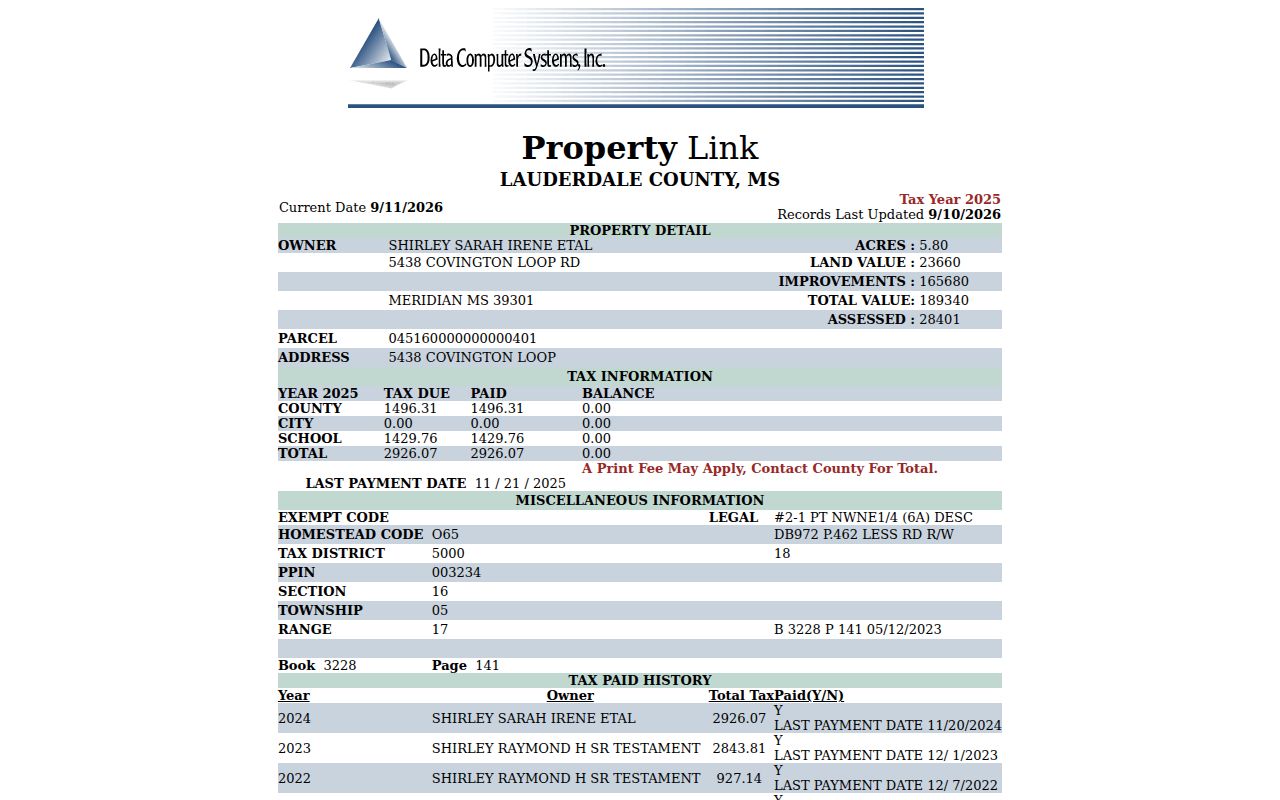
The image links owner, acreage, land, improvements, total, assessed value, tax district, PPIN, situs, and deed book and page. Use it as a field guide only.
Mississippi Ratios Shape Lauderdale Values
The Mississippi Department of Revenue states the formula plainly. Market value times the ratio equals assessed value. Class I owner-occupied single-family residential property uses a 10 percent ratio, while Class II other real property uses 15 percent. Two tracts with the same market value can therefore show different assessed figures.
- Market value
- The assessor's estimate of true value for the roll.
- Assessed value
- The market figure after the class ratio is applied.
- Assessment ratio
- The state-set percentage used to convert market to assessed value.
- Reassessment
- A new review of the value placed on property for a later roll.
- Consideration
- The value recited in a deed transaction, when shown.
Never reverse-engineer class from a rounded total. Read the class or homestead indicators instead, and confirm questions with the Tax Assessor.
Proposed Lauderdale Property Values
The county Online Services page links a 2026 proposed-value route. It also links a Real Property Request for Review form. A proposed Lauderdale County property value is a draft figure. It is not the prior current roll or a paid tax bill. Each answers a different question in the cycle. Keep a printout with its year. The visible default can change.
The review form asks for parcel, owner, contact details, reason for review, owner estimate, assessor recorded value, and improvement details. It also asks for support. Lauderdale County names no last revaluation year. Leave that gap clear rather than guessed.
Note: A proposed appraisal and a current tax detail can show different years. Both records stay correct.
Sale Price in Lauderdale Deeds
The appraisal card's deed history supplies dates, deed types, and book and page references. The card has no sale-price field. When price evidence matters, take the reference to the Lauderdale Chancery inquiry. Search the instrument there. Then inspect consideration in the index detail. Check the deed image too, when the instrument includes it.
A recorded figure still needs context. A quitclaim may transfer or clear an interest without any ordinary market sale. Estate deeds, related-party deals, partial tracts, and instruments covering several parcels can also break a simple comparison. A single price may not match a single parcel. Preserve the legal description and parcel references.
Land and Improvements in Lauderdale
Lauderdale appraisal records separate land from improvements. The sample parcel lists a residence plus a brick garage, wood carport, and concrete patio. Those parts roll into the improvement and total figures. Acreage, land class, and land amount stay distinct, so a reader can see which part moved when the total changes.
Do not infer building condition from a line item. The appraisal record is not an inspection report. For work history in Meridian or Marion, municipal permit files may offer context. Neither municipality offers a full public permit database.
Historic Lauderdale Assessment Trails
History does not end where the current Lauderdale County portal stops. MDAH Lauderdale Series 1202 holds digitized tax, land, and assessment material. The years covered fall in the nineteenth and early twentieth centuries. A parcel there can show taxable ownership, acreage, and assessed context. Still, none of it replaces a deed.
County Archives, courthouse books, and the MDAH Media Room offer more paths. Request material by record type, year, owner, tract description, and any known book or page. Keep requests narrow. Lauderdale County states plainly that it does not provide research services. A broad ask may go unanswered.
Limits of Lauderdale Property Value
A Lauderdale County assessed value answers one question: the taxable figure. It will not tell you what a buyer might pay today. It says nothing about repair costs. And it will not predict what a licensed appraiser would conclude after a full inspection. Treat GIS acreage and parcel lines the same way. Those are tax-map references, not survey proof. Before you rely on any number, match the claim to the Lauderdale County property records entry that actually supports it. That could mean the assessor roll, the deed, or the plat.
Key distinction. Assessed value is not a sale appraisal. Use current market evidence and qualified advice for a price opinion.
Questions about the tax bill belong on the Lauderdale County property tax records page. So do exemptions, payment status, and the appeal route. The value lookup stays narrower. It explains what each number means and where it is recorded.
When two property records disagree, resist the urge to call one wrong right away. A proposed appraisal can coexist with a current tax bill. A deed recorded this week can predate an appraisal upload. The GIS value field may simply copy county assessor data. It may not reflect a fresh appraisal. Compare dates and identifiers first. Then keep the PPIN, parcel number, year, source URL, and access date with every figure. The difference can be traced later.